Africa : Rethinking Disability Data Through a Gender Lens in Sub-Saharan Africa
In a landscape where development data often flattens complexity, some populations remain systematically uncounted. This analysis by Baltazar ATANGANA, senior expert in gender, social inclusion and development with over a decade of fieldwork across Central and West Africa, examines a persistent blind spot in how African societies measure and respond to disability, and why women bear the heaviest cost of that omission.

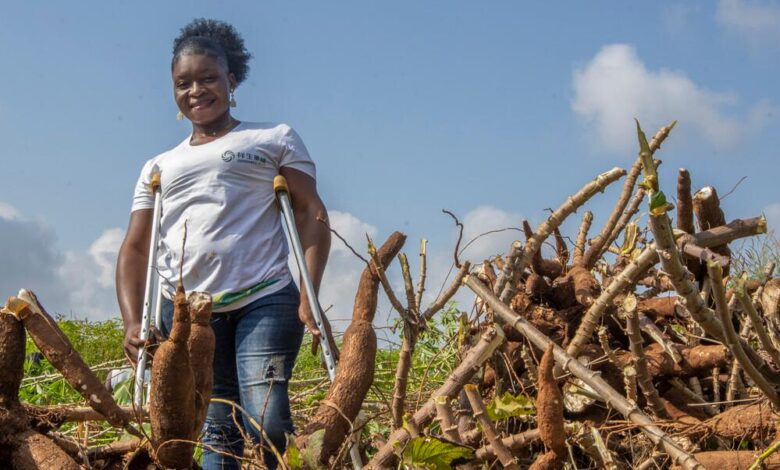
Think of a woman in rural Cameroon, living with a physical disability, seeking maternal healthcare at a district health center three hours away on unpaved roads. She is invisible in the national health data, not because she does not exist, but because the survey that gathered that data never asked about her disability, and the disability survey that passed through her village never asked about her reproductive health needs. She falls between categories. And that gap is not accidental.
The Numbers That Leave Women Behind
Across Sub-Saharan Africa, national surveys, censuses, and administrative data systems have long struggled to capture disability in a rigorous and consistent way. When they do, they rarely cross-tabulate findings by sex or gender. The result is a landscape of fragmented evidence where we know roughly how many people with disabilities exist in a country, but almost nothing about whether women with disabilities access health services, whether girls with disabilities attend school, or whether women with disabilities are disproportionately exposed to gender-based violence.
The Demographic and Health Surveys (DHS) and the UNICEF Multiple Indicator Cluster Surveys (MICS), two of the most widely used data collection tools in Africa, have made some progress toward including disability modules in recent years. But coverage remains inconsistent across countries, and when disability questions are included, the analysis rarely produces gender-disaggregated outputs in standard country reports. Researchers and policymakers are left inferring from partial data, or not inferring at all.
The WHO 2023 Global Report on Health Equity for Persons with Disabilities found that persons with disabilities face systematic barriers in accessing health services, with women confronting compounded disadvantages. Yet even this landmark document acknowledged the scarcity of data from low- and middle-income countries that would allow for a precise picture of how disability and gender interact at the level of health outcomes. The gap between what we need to know and what the data can tell us remains substantial.
A Silence That Has an Architecture
The absence of intersectional disability and gender data in Africa is not simply a technical oversight. It reflects deeper structural choices about whose lives are considered worth measuring.
For decades, African countries used impairment-based questions that produced inconsistent and non-comparable data. The Washington Group Short Set of Questions on Disability, developed to generate internationally comparable disability data, has begun to gain traction in the region. But adoption remains uneven, and even where these questions are used, the resulting data are rarely analyzed through a gender lens in official national reporting.
Beyond methodology, there is a structural problem in how research priorities are set. Women with disabilities in Africa are rarely at the table when research questions are designed, when survey instruments are tested, or when findings are interpreted. The research that does exist tends to be produced by institutions from the Global North, carries its own biases, and often treats disability and gender as separate analytical categories rather than as co-constituted realities that shape each other in specific social and cultural contexts. This is precisely what decolonial researchers mean when they describe extractive research, a model where knowledge is produced about communities rather than with them.
Africa is also a signatory to the UN Convention on the Rights of Persons with Disabilities (CRPD), which under Article 31 explicitly calls for disaggregated data collection to monitor the rights of women and girls with disabilities. The gap between that commitment and actual data practice on the ground remains wide enough to render the commitment largely symbolic.
Counting Differently to Finally Count Everyone
Closing the disability-gender data gap requires more than adding a checkbox to an existing survey. It requires rethinking who counts, how counting happens, and what is done with the numbers once they exist.
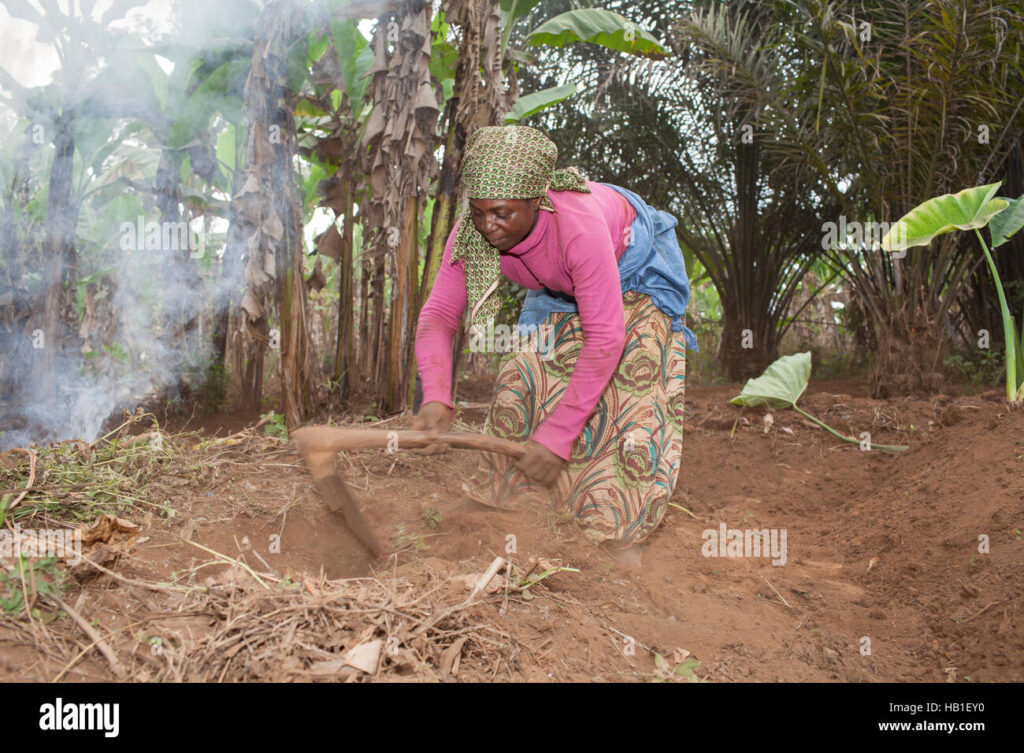 Participatory and community-based research methodologies offer a different starting point. When women with disabilities are involved as co-researchers rather than just respondents, the questions asked change fundamentally. Research conducted in the framework of Helen Keller International’s work on neglected tropical diseases and disability in West and Central Africa demonstrated that women living with NTD-related disabilities faced specific barriers to accessing services that would never have emerged from a standard household survey. Their knowledge of their own situation was irreplaceable, and it directly challenged assumptions embedded in national data systems.
Organizations working at the intersection of feminist evaluation and disability inclusion, such as Includovate, are developing approaches that treat lived experience as evidence rather than anecdote. The Washington Group Questions work best when communities understand why they are being asked, when enumerators are trained to interact respectfully with persons with disabilities, and when findings return to communities in formats they can actually use.
This also means investing in local research capacity. Sub-Saharan Africa has researchers and evaluators who understand the linguistic, cultural, and social contexts that shape how disability is experienced and reported. Building their capacity to produce rigorous, intersectional, gender-responsive disability research is not a secondary objective. It is the condition under which better data becomes possible.
The woman in rural Cameroon seeking healthcare without appearing in any dataset is not a marginal case. She is a signal about what the current evidence architecture is designed to see and what it is designed to miss. Measuring inequality requires measuring the people most likely to experience it. In Sub-Saharan Africa, that means building data systems that can see women with disabilities clearly, in their specificity, on their own terms. Until that shift happens, policy responses will remain blunt instruments for problems that require precision.
Baltazar ATANGANA
Gender, Inclusion and Development Advisor