An African Reading of Plan International’s The State of the World’s Girls 2026 Report: When Drought Mortgages Girls’ Futures
What becomes of an adolescent girl’s sexual and reproductive health when the rains fail, or fall too violently? Plan International’s State of the World’s Girls 2026 report, entitled “Change her Forecast”, puts this question to those most directly affected. It draws on a survey of 5,000 girls and young women aged 15 to 24 in Bangladesh, Kenya, Peru, Senegal and Zimbabwe, on 139 participants in interviews and focus group discussions, and on an analysis of health data from 52 countries. Nine in ten respondents report that climate shocks are placing strain on their household’s survival, health and stability. This reading gives priority to the three African countries studied, Kenya, Senegal and Zimbabwe, without losing sight of the aggregate findings.

A Diagnosis That Challenges Received Wisdom
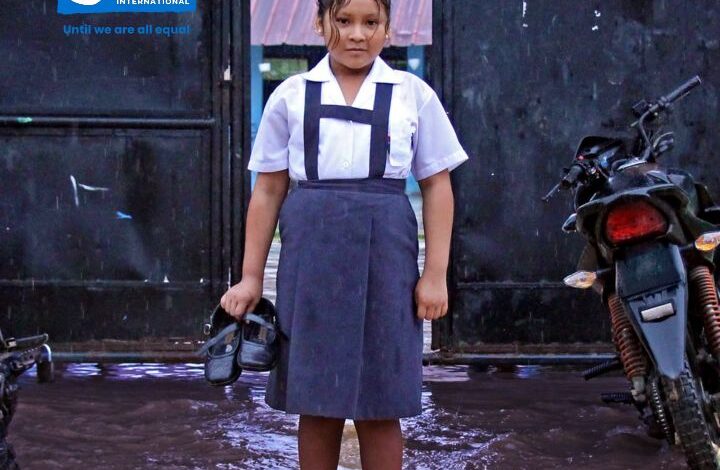
Sexual and reproductive health services are the first to give way: across the five countries, 76 per cent of respondents observe that more girls struggle to access at least one such service, and 68 per cent have experienced this themselves. The principal deficit, however, is not contraception but menstrual hygiene (products, water and privacy), followed by information and sexuality education. Dignity and knowledge, in other words, erode before clinical care does. Floods destroy schools, clinics and roads, yet it is drought, by undermining incomes, that leaves the deepest scars: in affected areas, 84 per cent of respondents report difficulties in accessing services, 60 per cent more marriages before the age of 18, and 54 per cent more unintended pregnancies, compared with 29 per cent elsewhere. Harm thus accumulates under sustained economic pressure rather than erupting from a single catastrophe.
Zimbabwe: Hunger as a Driver
Zimbabwe, where drought has persisted for several years, records the most severe figures. Some 98 per cent of respondents report at least one adverse effect on their household (90 per cent in the other countries), 74 per cent reduced access to food as against 31 per cent, and 51 per cent a loss of income as against 22 per cent. The social consequences follow: 64 per cent observe more early marriages and 60 per cent more gender-based violence. Chenai, aged 21, explains the mechanism:
“During drought, families lose money. Girls enter into relationships to get extra money.”
Vimbai, aged 17, portrays school dropout as a trap: girls who leave school face the advances of idle boys and sometimes end up yielding. Others choose marriage themselves, hoping to escape the effects of drought, only to find they have been mistaken. Participants also reported that health personnel were selling contraceptive pills in order to buy food.
Kenya: When the Herd Disappears
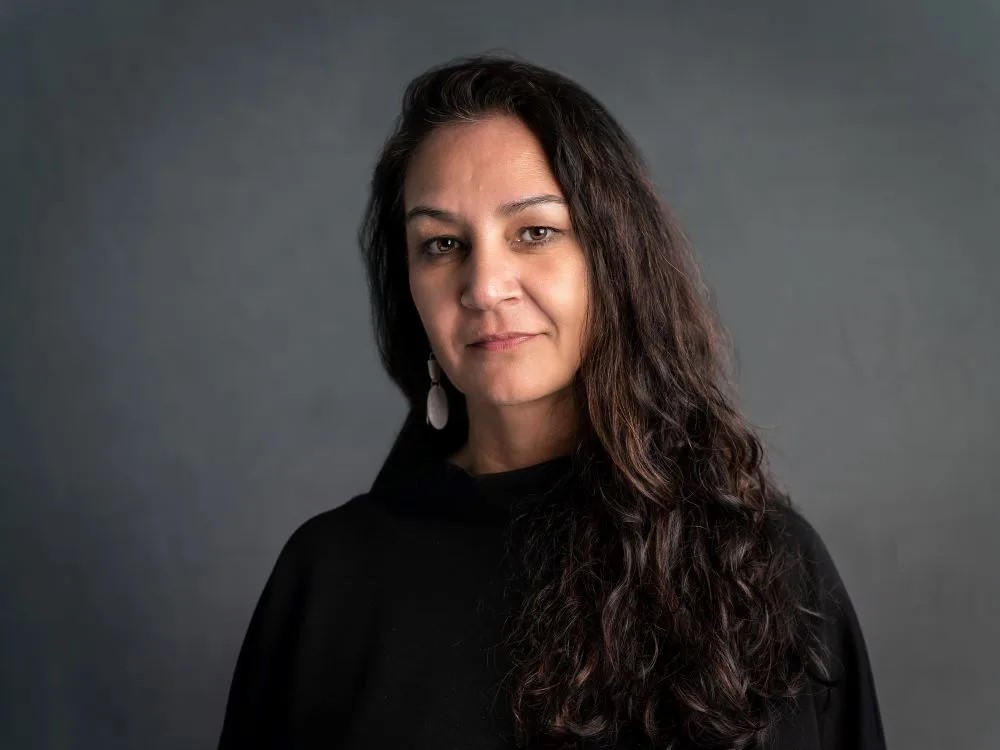
In Kenya, the livestock-based bride-price economy makes the link between climate and marriage almost arithmetical. Drought decimates the animals that constitute both income and marital capital, and what remains of the herd may be exchanged for a daughter. Galgalo, aged 22, summarises her own case: her father had no animals left to sell to send her to university, and it was on that basis that she accepted marriage. In some communities, marriage begins as early as 12. Pastoral mobility adds a further risk: girls leave school to follow migrations in search of water and pasture, and the long journeys expose them to coercion. As regards health, stock-outs in remote facilities and the suspension of outreach workers sever access to contraception. Together with Zimbabwe, Kenya records the highest rates of unintended pregnancy, and 34 per cent of respondents there note an increase in violence.
Senegal: An Instructive Exception
Senegal demonstrates that economic determinism does not explain everything. Although 32 per cent of respondents there perceive an increase in early marriage (22 per cent elsewhere), the interviews attribute it chiefly to school dropout rather than to family survival strategies. The phenomenon nonetheless remains widespread: according to Girls Not Brides, 30 per cent of Senegalese women marry before the age of 18, the legal minimum age for girls being set at 16. The threat stems from slow erosion: advancing seas, recurrent flooding, and overheated homes to the point that families sleep outdoors. The response is primarily communal, led by the imam, the local chief and family members, as well as by the Badienou Gokh, community “godmothers” who guide girls towards maternal care and support for victims of violence. The report stresses that they are not trained health professionals; they should therefore be equipped and supported rather than left to shoulder this burden alone.
Education and Financing: Two Levers
An analysis of nearly 2.9 million women between 1990 and 2019 confirms that the longer girls remain in school, the less likely they are to experience early marriage and intimate partner violence; those whose schooling is interrupted are twice as likely to marry before 18 or to experience an unintended pregnancy. Financing, by contrast, moves in the opposite direction: only 6 per cent of adaptation funding and 0.5 per cent of multilateral climate funding support health-related initiatives, while official development assistance fell by 23.1 per cent in 2025, according to the OECD. A modelling study published in The Lancet Global Health estimates that a complete cessation of United States funding, without replacement, would result in between 40 and 55 million additional unplanned pregnancies over the period studied.
The report recommends ring-fencing a share of climate and humanitarian finance for sexual and reproductive health, including contraceptives and menstrual products in emergency kits, pre-positioning cash transfers and social protection before crises occur, and funding local girl-led organisations.
“Changing the forecast for girls and young women requires more than responding to disasters as they occur,” writes Reena Ghelani, Chief Executive Officer of Plan International. With a developing El Niño, the warning holds for Africa. The findings rest on respondents’ perceptions, but they are consistent with the statistical analysis of 52 countries.
Read the full report: https://plan-international.org/publications/change-her-forecast/
Baltazar ATANGANA
Gender and Social Inclusion Advisor
noahatango@yahoo.ca